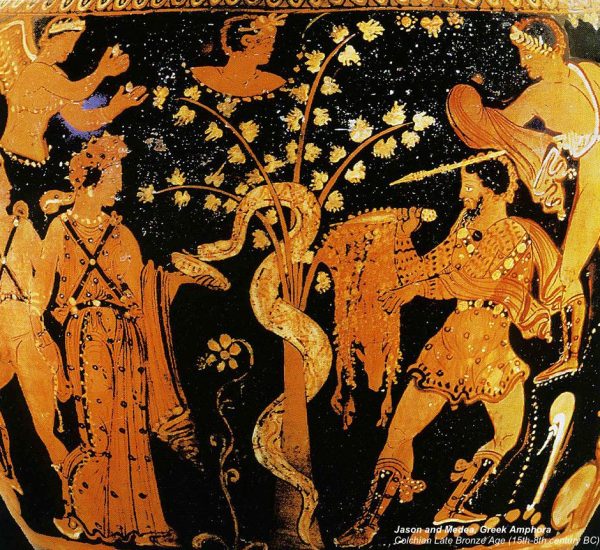
The story of the Ojaleshi grape is often poetically linked to the legendary voyage of Jason and the Argonauts around 1300 BC, who sailed abroad and reached the Kingdom of Colchis (modern Georgian Black Sea coast), in order to retrieve the Golden Fleece from Medea.
In the lush landscapes of western Georgia, the heroes are said to have encountered vines heavy with dark, luscious grape clusters. Ancient Greek pottery depicting scenes of the Golden Fleece sometimes features a sacred tree intertwined with vine leaves and grape clusters, symbolizing wealth and divine blessing.
Modern archaeological studies confirm that the Colchis region was indeed rich in gold deposits. This historical reality strengthens the poetic hypothesis that the grapes symbolically associated with the myth may reflect early Georgian viticulture. Georgia is widely regarded as one of the world’s oldest wine-producing regions, with an 8,000-year-old winemaking tradition.
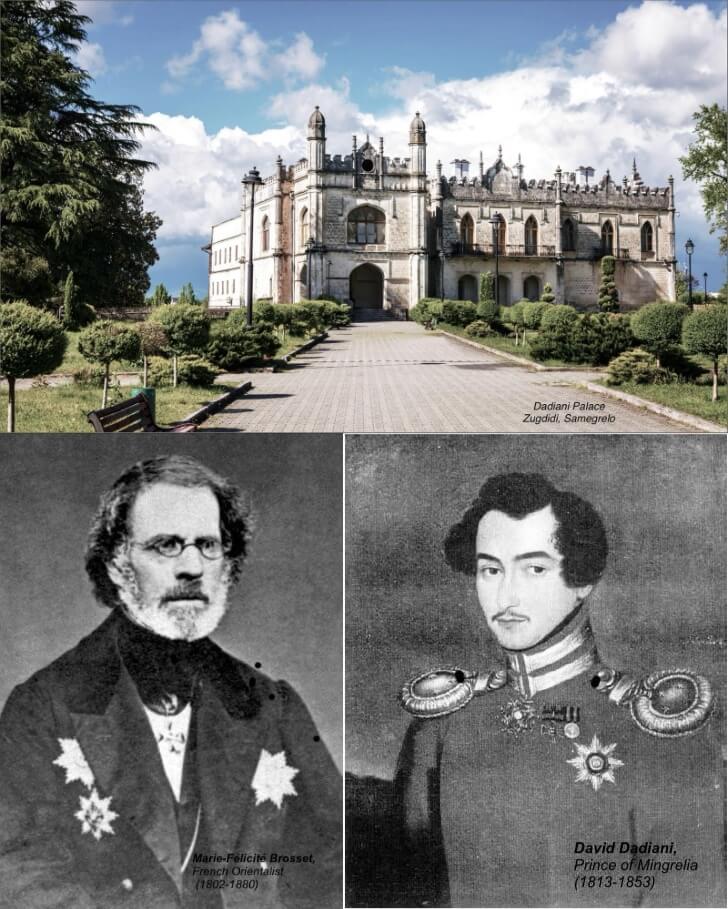
Marie-Félicité Brosset, a famous French orientalist, visited the chief of Samegrelo, David Dadiani in Zugdidi. During his visit, he tasted the Ojaleshi wine, made from the grapes grown in Salkhino and wrote with admiration: “God knows what nectar is this "Ojaleshi... The chief treated us with great honour and asked for the eighteen- year-old wine to be served to us. I would only compare it to the most famous Bordeaux wines”. The summer residence of the Dadiani clan used to be in Salkhino and we should be grateful to David Dadiani’s European education which contributed to the first Ojaleshi cultural plantation there.
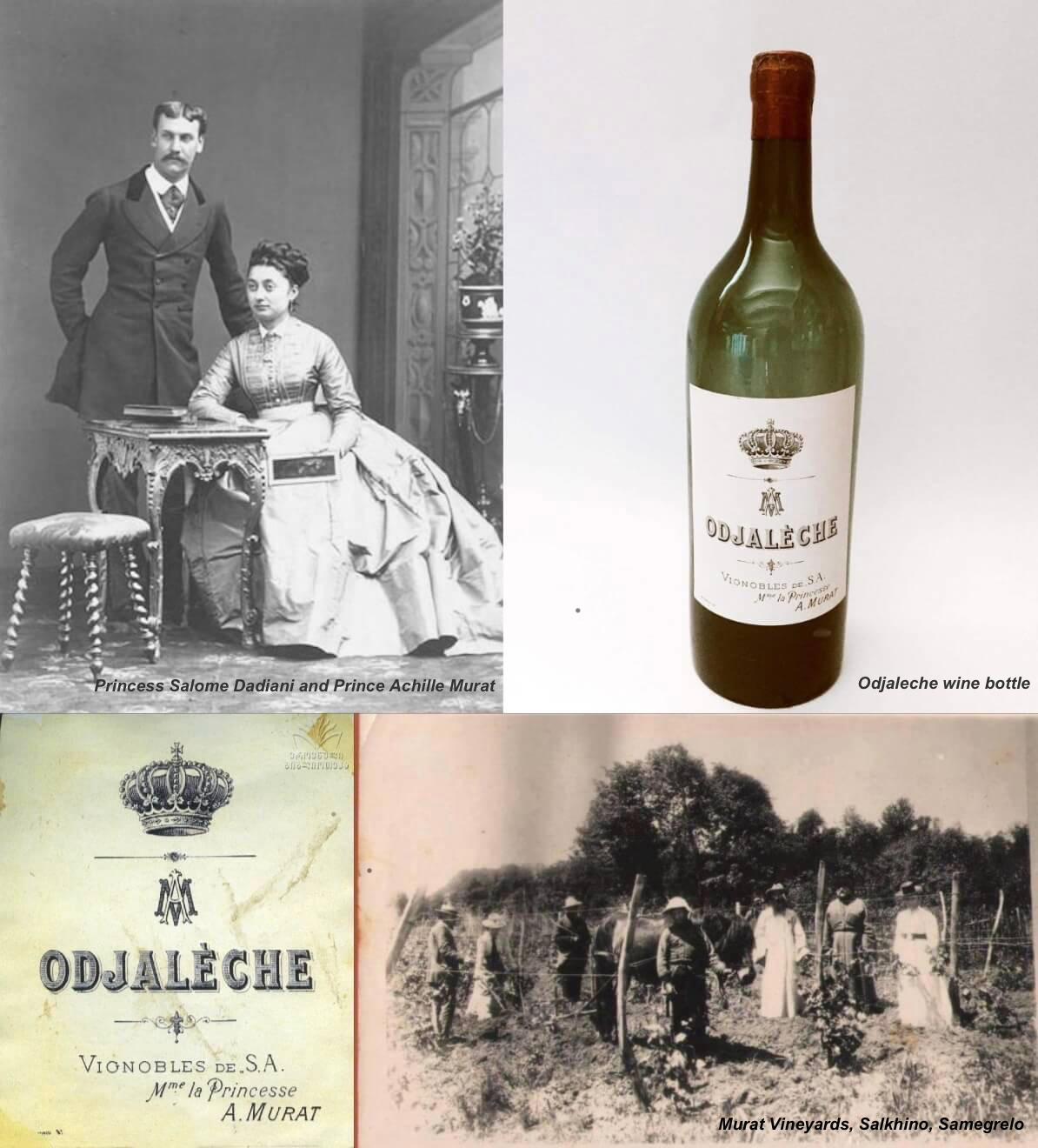
Later Dadiani’s residence with its vineyards was handed over to David's daughter, Salome Dadiani and her husband Achille Murat, grandson of Napoleon Bonapart’s famous commander, the King of Naples, Joachim Murat.
Achille Murat duly assessed the unique climatic conditions of the village and increased the area of Ojaleshi vineyards to 16 hectares in Salkhino. Murat engrafted the vineyards on phylloxera-resistant rootstocks, and this measure saved Ojaleshi from the destructive spread of an infesting pest from America.
Under Murat’s special winegrowing practices the grapes were harvested late in the beginning of December, and fermented on chacha. Therefore, the wine acquired a special extraction, rich colour, flavour and depth, while the alcohol content reached 14%- 14.50%. He produced wine under the brand “Odjalèche – Vignobles de S.A. la Princesse A. Murat”, which later was exported to France.
In 1912 at the Paris Agricultural Exhibition Ojaleshi bottled in Salkhino was highly esteemed and awarded a gold medal.
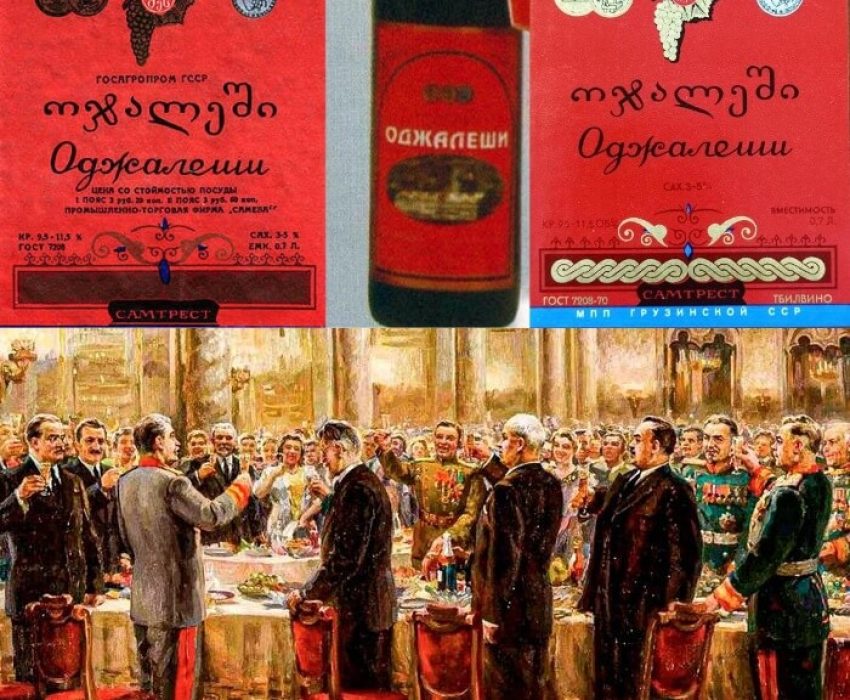
During the Soviet era the variety was almost lost, it was displaced by industrial grape varieties, and by the 21st century it was on the verge of being lost.
As a true Georgian, Joseph Stalin showed a marked preference for products from his homeland, especially Georgian wines. Among the distinguished selections that appeared at his official receptions and private gatherings, Ojaleshi held a special place.
During the Soviet period, it belonged to the group of elite Georgian wines. It was frequently served at state banquets, high-level diplomatic receptions and private gatherings within the upper circles of the USSR. In the highest echelons of Soviet leadership, it was consumed as a symbol of refinement and cultural distinction.
More than just a beverage, Ojaleshi represented Georgian heritage within the Soviet system. Even during an era defined by centralized control, this wine preserved its regional identity and centuries-old winemaking tradition. As such, it stood not only as a celebrated wine of Samegrelo, but also as a distinguished representative of Georgia’s viticultural legacy in the highest circles of the Soviet Union.
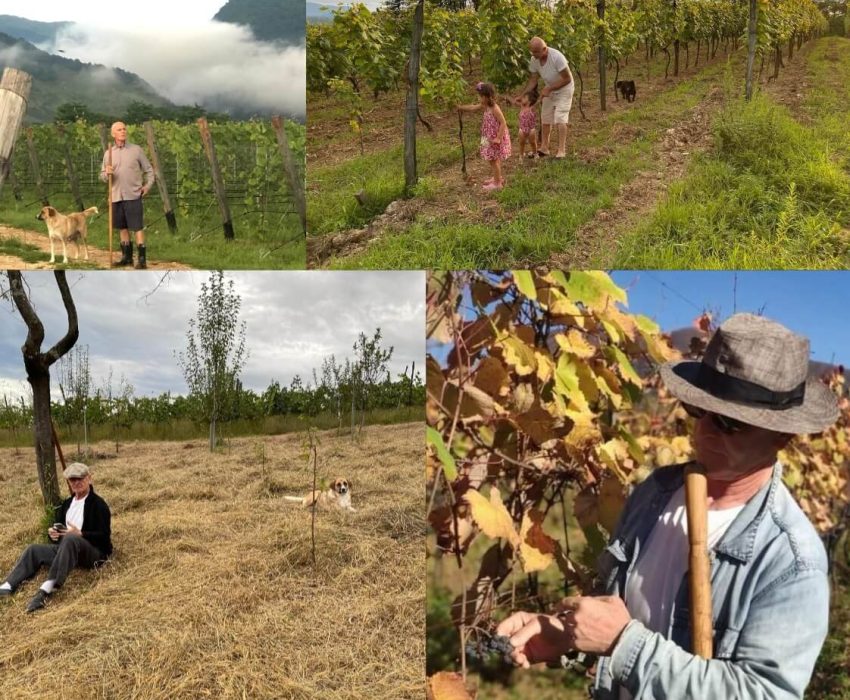
At Klimenti Kekutia Wine Estate, life is always evolving just as Ojaleshi vineyards and winemaking continue to grow with every season. Our passionate oenologists look to the future while honouring tradition, exploring new techniques and carefully introducing select grape varieties inspired by expertise from France and Germany. Each step reflects our belief that great wine is alive, shaped by people, knowledge and the blessed land of Samegrelo, Western Georgia.
To bring the spirit of our family vineyards closer to wine lovers in the capital, we opened the brand restaurant Odjaleche House in the heart of Tbilisi. Here, guests can taste our wines alongside authentic Megrelian dishes freshly prepared with love and local ingredients of Salkhino. Warm hospitality, cosy atmosphere and guided tastings invite visitors to discover our story, meet our people, and bring home bottles of Klimenti Kekutia wines that carry the flavour of Salkhino.